
Digital partner of a media group
Since 2012, Be API has been supporting the M6 Group and M6 Unlimited in the evolution of their WordPress platforms, and accompanying the group's transformations.
Users no longer use a list of results to search for information, compare solutions or choose a provider. They now question engines capable of building a response, recommending brands and directly citing certain sources.
Be API supports you in the design and deployment of a Generative Engine Optimization strategy adapted to your WordPress site. Our goal: to strengthen your brand's ability to be understood, mentioned and cited in the responses generated by artificial intelligence.
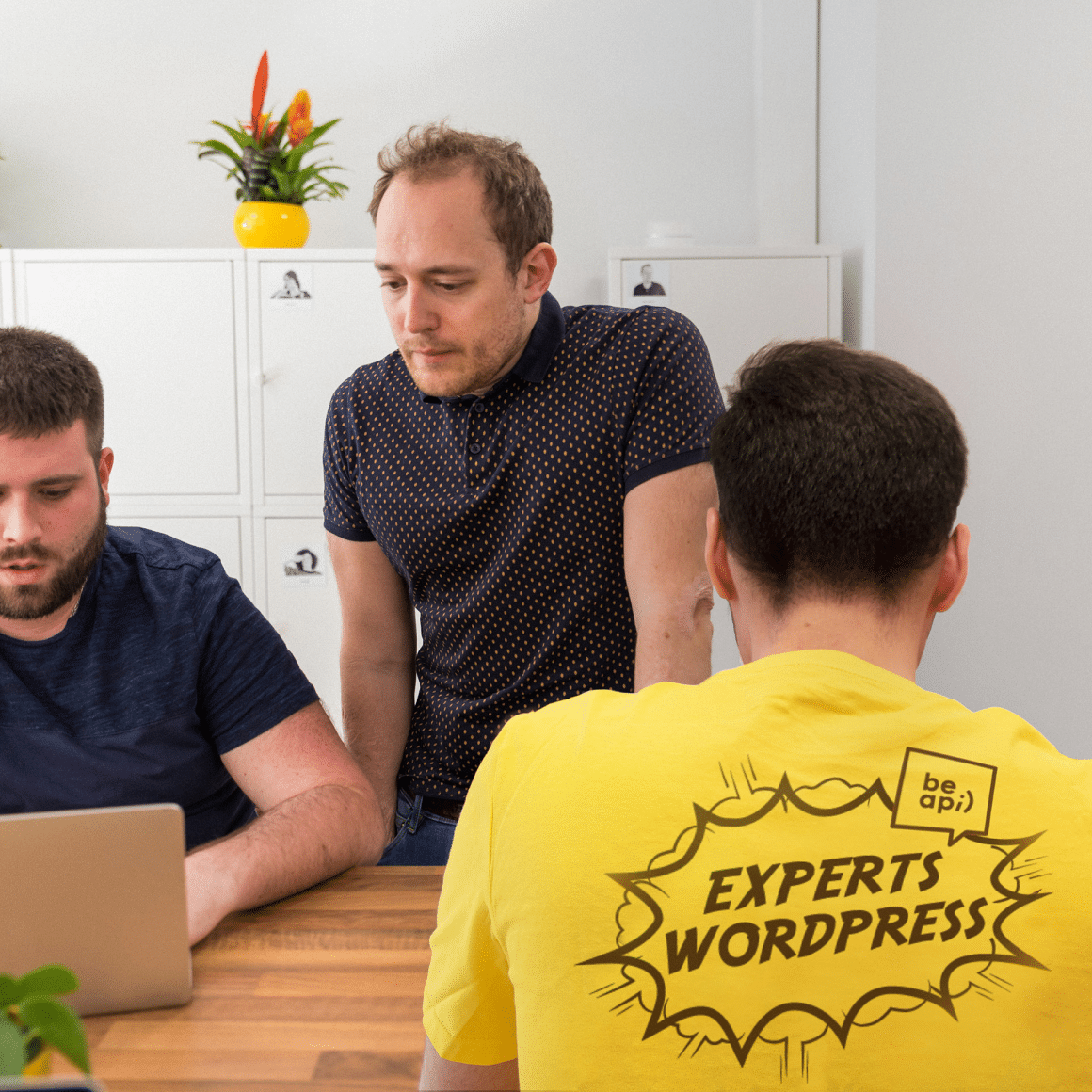
Expertise seo and geo
Technical knowledge of WordPress
Recommendations directly actionable
The Generative Engine Optimization, or GEO, refers to all actions designed to improve the presence of a brand and its contents in the responses produced by engines and assistants based on artificial intelligence.
The goal is no longer just to get a position in a result page. It must also be understood whether, when a user asks a question related to your activity:
These different forms of presence should not be confused.
Your brand appears in the answer, without a page of your site necessarily being used as a visible source.
Your brand or solution is integrated into a selection, comparison or recommendation made in response to the user's need.
A URL of your site is presented as a source to verify, complete or deepen the generated response.
The user clicks on the proposed citation or link and continues its journey on your site.
One GEO strategy must work on these different dimensions. A mark can be often mentioned but rarely mentioned. Another may obtain citations on informative content without appearing in the commercial recommendations.
Our role is to measure these gaps, understand their causes and build a suitable roadmap.
GEO is not a technique to force an AI to recommend a brand. It is based on solid SEO foundations, clear content, demonstrable expertise, consistent information and recognized authority beyond the site.
In a classic search engine, visibility is mainly observed through a succession of steps:
Position → Print → Click → Visit → Conversion
In a response engine, the course is different:
Prompt → Search and selection of sources → Response generation → Mention or citation → Possible visit
The user can obtain a significant part of the information without immediately visiting the site. This does not mean that the site loses its value. It becomes both:
Response engines can be based on several researches, different sources and different mechanisms depending on the question asked. Two close formulations therefore do not necessarily produce the same answers, recommendations or quotations.
This is why a GEO strategy cannot be based on the observation of a single question asked only once. It requires a structured panel of prompts, repeated tests and trend analysis rather than conclusions from an isolated response.
There is no magic tag or WordPress extension capable of guaranteeing a presence in IA responses.
Visibility depends on a set of technical, editorial and external signals to be analysed jointly.
To be used as a source, content must first be able to be discovered, explored and interpreted.
We check in particular:
These controls must take into account robots used by search engines and artificial intelligence services. It is also necessary to distinguish between exploration for research and exploration for model training.
Content can be very comprehensive while still being difficult to interpret or cite.
We seek to make information more explicit through:
The aim is not to unify all content or transform it into lists. It is to allow readers and automated systems to quickly identify the subject, response and associated evidence.
A brand is not a name or logo. It is linked to offers, leaders, experts, locations, partners, achievements and areas of expertise.
We analyze how these elements are presented on the site:
A site that uses several conflicting formulations or does not clearly identify its experts makes it more difficult to understand the brand.
Response engines must be able to distinguish a commercial claim from sound information.
We help you strengthen your content by:
Useful content does not just say that the company is expert. It allows us to understand how she works, what data she relies on and what she really learned.
The information published by a brand on its own site is important, but only part of its digital footprint.
We also study:
The aim is not to artificially multiply the occurrences of the brand name. It is to develop a coherent presence on the sources actually consulted and recognized in its ecosystem.
Offers, regulations, data and uses are changing.
Obsolete content can continue to be accessible while disseminating information that has become inaccurate. We help you set up governance rules for:
The freshness does not consist of artificially changing a date. It must correspond to a true verification of the information.

Our GEO audit measures its actual presence, identifies the preferred competitors and reveals the themes on which it remains absent.
Our support covers the entire cycle: initial measurement, strategy definition, site evolution, authority development and results monitoring.
1.
We begin by establishing an objective state of affairs of the presence of your brand.
The analysis may include:
We never assume that a page is visible in a response engine if the data does not show it. A brand name, a URL quote and a simple thematic proximity are distinguished in the deliverables.
You get a starting photograph, a gap analysis and a prioritized roadmap.
2.
Users do not formulate their requests in the same way in a response engine and in a conventional search engine.
They ask longer questions, add constraints, ask for comparisons or seek a recommendation that is directly tailored to their context.
We are building a mapping that includes:
The prompts are grouped by intention, persona, market, language and maturity.
This mapping defines the content to be created, the pages to be reinforced and the questions on which the brand must legitimately be able to answer.
3.
We analyze the existing pages to identify those that can become reference sources.
Optimization can include:
We do not rewrite the contents to make them artificially mechanical. We seek to enhance their value, accuracy and ability to respond clearly to an intention.
4.
Some opportunities require creating new resources.
Depending on your sector, it may be:
We define for each content:
The content must first be useful to the people to whom it addresses. Its structuring then makes it easier to discover, understand and quote.
5.
WordPress can become a true foundation of knowledge provided the contents are properly modelled and linked.
Our teams can intervene on:
We seek to integrate good practices into templates and contribution experience. Editorial teams can publish consistent content without having to manually apply dozens of rules to each new page.
6.
Structured data helps engines interpret certain information on a page, but it must match exactly the visible content.
Depending on the project, we can work on representing:
We also monitor the consistency between this information, the content of the website and external sources.
Structured data does not guarantee a quote in an IA response. They participate in a broader package to make information explicit and consistent.
7.
GEO visibility is also built off site.
We identify the environments in which the brand and its experts need to strengthen their presence:
We work with you on the content and evidence that can be taken up: original data, analyses, methodologies, studies, tools, barometers or expert viewpoints.
The challenge is to become a legitimate source in your domain, not artificially creating worthless mentions.
8.
The responses generated vary according to the engines, models, available sources, the formulation of the prompt and the time of observation.
GEO must therefore be driven over time.
Our support can include:
We document the method of observation in order to distinguish the sustainable trends from the point variations.
You have recognized expertise and quality content, but your company does not appear when users are looking for solutions in your field.
We analyze the promptness involved, the preferred marks, the sources used and the deviations that may explain this absence.
Some competitors regularly appear in the responses while their classic SEO visibility does not always seem to exceed yours.
We study their editorial and reputational footprint to understand:
The goal is to identify levers adapted to your own positioning, not to mechanically reproduce their strategy.
Your site publishes studies, guides or analyses, but these content is rarely mentioned.
We evaluate their accessibility, structure, accuracy, level of evidence, mesh and dissemination beyond the site.
A redesign allows GEO to be integrated into the foundations of the future site:
We work with design and development teams to integrate these requirements before commissioning.
Visibility in responses can vary greatly depending on language, geographic area and available sources.
We can build rapid market panels and analyze:
A new offer can be well presented on the site without still being associated with your brand in the responses generated.
We help you gradually build its territory:
A common vision of SEO and GEO
We do not treat GEO as an independent lever to replace natural SEO.
We articulate the two disciplines around common foundations: accessibility, architecture, content, networking, expertise, authority and measurement.
This approach avoids artificial optimizations and allows to focus efforts on improvements useful to your overall organic visibility.
A technical expertise of WordPress
We understand how templates, taxonomies, extensions and Gutenberg blocks generate pages.
Our recommendations can therefore be translated into specific CMS developments and implemented across all relevant content.
A method based on observation
We clearly distinguish:
We never declare that a page appears in an answer if the data do not show it.
A capacity to implement
Our GEO consultants can work directly with WordPress developers, designers, analytics experts and editorial teams.
The strategy is not limited to a report: templates, content, data and measurement can be integrated into the project.
A global reading of authority
GEO visibility is not built solely from the site.
We also analyze the brand, its experts, its evidence, its reputation and external sources that structure its digital environment.
A long-term pilotage
Engines and their responses are changing rapidly. We can monitor regularly to identify trends, new opportunities and possible loss of visibility.
SEO and GEO meet different objectives but are based on many common foundations.
In particular, the SEO seeks to improve:
In particular, GEO seeks to improve:
In both cases, the quality of the technical base, clarity of content, meshing, evidence and authority remain decisive.
A coherent strategy therefore does not choose between SEO and GEO. It organizes efforts to be visible both in research results and in the responses generated.
GEO, or Generative Engine Optimization, refers to actions aimed at improving the way a brand, its experts and content are understood, mentioned or cited in the responses generated by artificial intelligence.
It combines rapid analysis, editorial optimization, technical SEO, entity structuring, authority development and response monitoring.
The SEO works mainly on the visibility of pages in research results. GEO is interested in the presence of the brand and its contents in the responses synthesized by IA engines and assistants.
Both disciplines are complementary. A solid SEO base facilitates the discovery and interpretation of content, while GEO extends the analysis to references, recommendations and citations.
No. No serious provider can guarantee that a mark or page will be cited for a given prompt.
Responses depend on engines, models, available sources, formulation and context. Our support aims to improve visibility conditions and measure developments, without promising an artificially guaranteed result.
The scope is defined according to the client's hearings and contracts. It can include ChatGPT, Gemini, Perplexity, IA features of Google Search and Microsoft Copilot.
The list may evolve according to the uses, countries and measurement tools available.
We build a panel of prompts, observe the answers and distinguish between brand statements, recommendations, quotes, URLs used and competitors present.
Tests are repeated using a stable methodology to identify trends rather than draw conclusions from a single response.
Yes. WordPress allows to structure contents, authors, taxonomies, data and editorial relations adapted to a GEO strategy.
However, the quality of the result depends on its implementation: templates, HTML, mesh, performance, exploration rules, structured data and contribution experience.
There is no universal structured data to ensure the appearance of a page in an IA response.
Existing structured data can help clarify the information on the page, provided that it corresponds to the visible content and is properly implemented.
A file llms. txt alone is not a GEO visibility lever and is not a universal condition for appearing in IA responses.
The priority remains to have an accessible site, clear content, good networking, consistent information and demonstrable authority. We evaluate additional files or protocols based on their actual adoption and relevance to the project.
Yes. Be API teams can evolve templates, content types, Gutenberg blocks, mesh, structured data and exploration rules.
We can also support your editorial teams in optimizing and producing content.
Since 2012, Be API has been supporting the M6 Group and M6 Unlimited in the evolution of their WordPress platforms, and accompanying the group's transformations.

Complete overhaul of the Let's Talk HR platform, with the aim of aligning the site with its B2B media positioning while strengthening the technical stability and editorial autonomy of the teams.
You want to know what artificial intelligences really say about your brand, why your competitors are recommended or which pages of your site are used as sources?
Our experts analyze your current presence and build a GEO strategy adapted to your WordPress site, audience and goals.