
A common WordPress base and +10 years alongside the M6 Group
The M6 Group is a major player in media and entertainment in France, bringing together several brands and digital platforms for the general public as well as professionals.
Being powered by WordPress does not guarantee to be visible on Google. Architecture, performance, templates, content, mesh and quality of implementation directly influence your ability to position yourself.Be API brings together SEO expertise and technical mastery of WordPress to design, correct and advance sites capable of generating sustainable organic visibility.
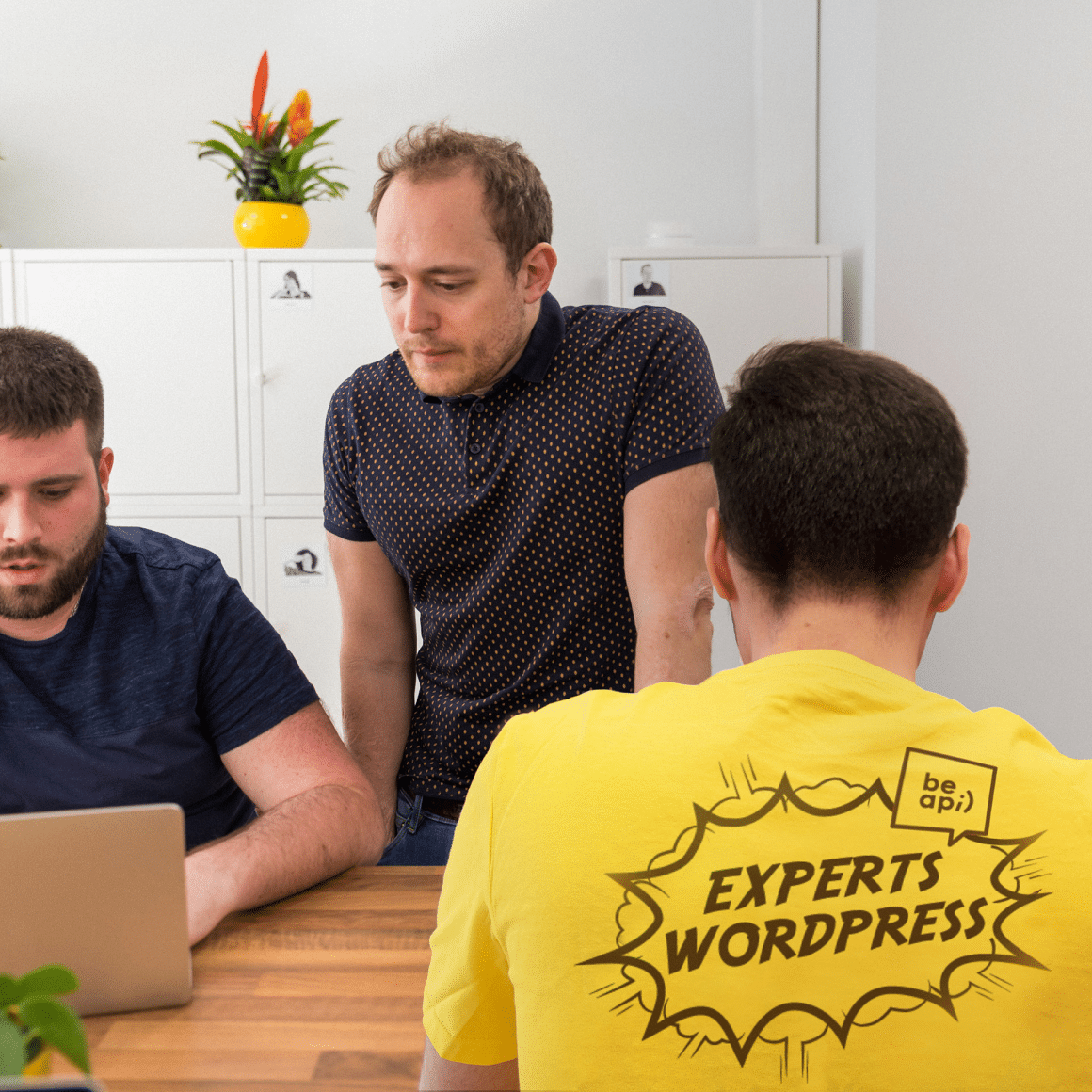
Specialized agency WordPress
Experience in complex, multisite and international projects
Senior SEO Consultants
WordPress offers great freedom to design, publish and evolve a site. But this flexibility does not guarantee its visibility in search engines. Depending on how the CMS is configured and developed, it can support an ambitious SEO strategy as well as increase obstacles to exploration, indexing and positioning of content.
Themes, extensions, Gutenberg blocks, taxonomy, pagination, internal search engine, multilingual content: each component can modify the structure of pages, internal links and HTML code transmitted to search engines.
We regularly meet WordPress sites facing:
The risk therefore does not come from WordPress itself. It comes from its implementation, configuration and decisions made without a global SEO vision.
At Be API, we treat SEO as a structural component of the project WordPress. Architecture, templates, editorial experience, performance and measurement must be thought together to build sustainable visibility.
There is no universal SEO recipe. A media site, an international corporate site, a website factory or an e-commerce platform does not meet the same constraints or opportunities.
Our support starts with your context: your business objectives, your audiences, your markets, your organization, your SEO history and the specifics of your WordPress environment.
We then mobilize the necessary expertise to intervene on all the levers that influence your visibility.
Before establishing a roadmap, we seek to understand what really limits the performance of your site.
Our analysis may include:
The objective is not to produce a succession of automated alerts. We distinguish anomalies that have a real impact from generic recommendations, then classify actions according to their impact, complexity and technical dependencies.
A successful SEO strategy begins with an architecture that links user needs, company objectives and how engines understand the site.
We analyze the research intentions associated with your offers and hearings to determine:
This semantic mapping is then translated into WordPress: types of content, taxonomy, templates, navigation, editorial blocks and contribution rules.
The goal is to build an architecture comprehensible by the engines, intuitive for users and administrable for the duration of your teams.
A SEO recommendation only creates value if it can be properly applied in the site.
Our SEO consultants work directly with WordPress teams to evolve the components that influence organic visibility:
We favour structural and sustainable corrections. When a problem repeats itself on hundreds or thousands of pages, we intervene on the WordPress template or logic that generates it rather than multiply manual corrections.
This approach reduces SEO debt, makes future publications reliable and makes optimization sustainable.
Publishing regularly is not enough. Each content must meet an identifiable need, integrate into a coherent architecture and provide a higher value than already available pages.
We support you in defining and deploying your editorial strategy:
Artificial intelligence can accelerate certain stages of production, but it does not replace strategy, business expertise or editorial control. We define non-invention rules, quality criteria and validation processes adapted to your organization.
The aim is not to produce more content. It is to publish the right content, at the right level of quality, in a structure that allows them to be found and understood.
A redesign is an opportunity to sustainably improve the visibility of a site. It is also a high-risk period when SEO is treated too late in the project.
Changing the tree, URLs, templates or editorial perimeter may result in loss of high-performance pages, rupture of internal mesh or loss of signals acquired over time.
We integrate the SEO from the early stages of the redesign:
The redirection plan is an essential brick, but it is not enough to secure migration. Content retention, meshing, templates, canonicals, sitemaps and performance must also be monitored.
Our role is both to preserve the existing that works and to use the redesign to correct the structural boundaries of the previous site.
Organic visibility does not depend solely on what is published on your site. Engines also evaluate your brand's place in its digital environment.
In particular, we analyse:
From this analysis, we define a strategy adapted to your sector: valorisation of proprietary data, reference content, digital press relations, editorial partnerships or improvement of the presence of your experts.
The aim is not to artificially accumulate backlinks, but to gradually strengthen the legitimacy of your brand and its content.
The SEO does not end after an audit or commissioning. Uses, competitors, research results and the site itself are constantly evolving.
We can provide regular pilotage including:
Indicators are defined according to your objectives. We do not limit ourselves to observing the overall evolution of traffic: we seek to understand which pages, intentions and routes actually contribute to your activity.

A WordPress SEO audit allows to identify the priority brakes and build a first roadmap adapted to your organization.
Our method links strategy, technical expertise and execution capacity. It adapts to a specific mission as well as to a long-term support.
1.
We start by listening to your teams and analyzing your environment.
We seek to understand:
This scoping phase avoids treating SEO as an isolated subject. It allows us to link the recommendations to the real issues of the project.
2.
We cross the available data with a technical, semantic and competitive analysis.
Depending on the context, we can exploit:
This analysis distinguishes symptoms from real causes. A decrease in traffic may, for example, be due to a change in structure, an indexation problem, less relevant content or a change in search results.
3.
Not all recommendations can be implemented simultaneously, and not all have the same value.
We build a roadmap that takes into account:
Each action must be understandable, attributable and exploitable. Your teams know what needs to be done, why this action is necessary and how its outcome will be assessed.
4.
Be API can intervene directly on the implementation of WordPress evolutions or work with your existing teams and partners.
In particular, we can:
The SEO is thus integrated into the production cycle of the site, with clearly defined validation criteria.
5.
After deployment, we verify that the modifications have been taken into account by the engines and that they produce the expected effects.
We analyze:
exploration of new URLs;
indexing pages;
The evolution of positions;
impressions and clicks;
the progress of strategic pages;
qualified organic traffic;
interactions and conversions;
possible side effects.
The lessons learned then feed into the next stage of the roadmap. SEO becomes a process of continuous improvement, not a succession of isolated actions.
A decrease in traffic does not necessarily mean that the entire site is in difficulty. It can be concentrated on a few directories, some queries or historically powerful pages.
We analyze the origin of the decline to distinguish:
You get a diagnosis supported by data and a list of priority actions.
The SEO must be used prior to validation of the tree, models and templates.
We help you identify the content to be preserved, the opportunities for restructuring and the technical requirements to be integrated into the future site. We also prepare the redirection plan and the post-migration surveillance strategy.
The objective is to secure the gains while improving the SEO foundations of the new WordPress.
Your site regularly publishes and does not show a major error, but its visibility seems to reach a ceiling.
We then look for the less visible levers:
The accompaniment allows to emerge from a logic of point corrections and to find a structured growth path.
On a site containing thousands or millions of URLs, a template anomaly can produce considerable effects.
We intervene on the issues of:
We prefer industrializable rules and scale corrections, rather than manual optimizations that are impossible to maintain.
One website factory or an international organization requires common rules without removing the particularities of each market.
We can accompany you on:
The aim is to build a common SEO framework that is understandable and applicable to all teams.
The increase in the volume of content should not be at the expense of its quality and usefulness.
We help you structure:
This allows you to accelerate production while maintaining editorial consistency and human supervision.
A double expertise SEO and WordPress
We do not just analyze the site from outside. We understand how WordPress generates pages, organizes content and applies technical rules.
This double reading allows us to make specific, realistic recommendations that are compatible with the project architecture.
Teams capable of implementing recommendations
Our SEO consultants collaborate with developers, designers, analytics experts and WordPress project leaders.
You thus avoid the break between diagnosis and integration. Decisions are shared, constraints are identified upstream and results can be monitored in the site.
An approach adapted to complex projects
We intervene on corporate sites, media, international platforms, multisite environments and high volume projects.
Our approach takes into account governance, information system constraints, editorial processes and other project stakeholders.
Priority and actionable recommendations
We do not provide an undifferentiated list of good practices.
Each recommendation is contextualized and can be accompanied by:
The roadmap becomes a pilot tool shared between marketing, editorial and technical teams.
A sustainable vision of performance
We seek to correct structural causes rather than their consequences alone.
Our recommendations take into account the maintenance of the site, the autonomy of contributors, performance, accessibility and future evolutions of WordPress.
The SEO is thus integrated into a broader approach of digital quality and performance.
WordPress has its own logic of generation of pages, taxonomy, templates and extensions. A specialized agency can analyse SEO problems, but also understand their origin in CMS and offer a solution adapted to its architecture.
At Be API, SEO consultants work directly with technical teams to link recommendations to their implementation.
No. An extension facilitates the management of certain tags, sitemaps or indexing rules, but it does not define your strategy.
It does not decide your architecture, your content, or your internal mesh. Nor does it automatically correct problems caused by a theme, template or misuse of taxonomy.
An SEO extension is a configuration tool. It does not replace human analysis, strategy and expertise.
Yes. We can audit and develop an existing site without necessarily undertaking a complete overhaul.
Depending on the problems identified, we intervene on configuration, templates, performance, architecture, content or internal mesh. The actions are prioritized to gradually improve the site taking into account its current constraints.
The delay depends on the initial situation of the site, the competition, the nature of the actions and the speed of implementation.
Some technical corrections can have relatively rapid effects on exploration or indexing. An editorial strategy or strengthening of authority usually takes more time.
We define intermediate indicators to monitor the inclusion of actions even before their full impact is visible on traffic and conversions.
Yes. We intervene from the framing to define the tree, identify the strategic contents, specify the templates and prepare the redirection plan.
We then make a SEO recipe before starting production, then monitor exploration, indexing, positions and traffic after launching.
Yes. We can complement an internal team, an editorial agency, a media agency or other technical partners.
We define responsibilities, deliverables and validation channels to ensure that the OES is properly integrated into the overall governance of the project.
Yes. We are working on the issues of WordPress Multisite,websites factories, multilingual content, hreflang tags and international governance.
Accompaniment can include global architecture, common rules, local specificities and monitoring of performance by site or market.
The M6 Group is a major player in media and entertainment in France, bringing together several brands and digital platforms for the general public as well as professionals.
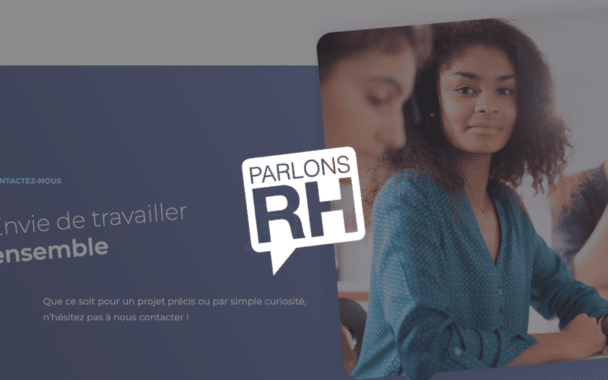
Complete overhaul of the Let's Talk HR platform, with the aim of aligning the site with its B2B media positioning while strengthening the technical stability and editorial autonomy of the teams.